Glute strengthening for IT Band Syndrome

A study back in 2000 came out concluding that one of the single most important aspects for IT Band syndrome rehab is Glute strengthening. The use of the foam roller over the last few decades has popularized it’s use for IT Band syndrome. This is a great way to give independency for the individual to help manage the pain and not rely on other therapies such as medication. In regards to fixing the actual problem just foam rolling over the IT band won’t cut it. The Glutes and Tensor fascia latae muscle attach to the IT band and a abnormal pull between these two muscles causes abnormal tension on the IT band below. (See picture below)
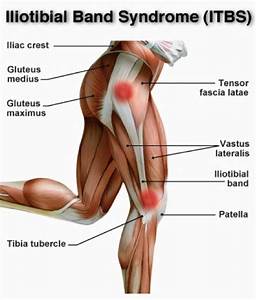
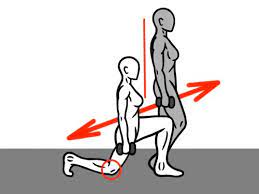
This tension will lead to sharp or burning pain on the outside part of the leg just above the knee. Running and cycling are common activities that lead to IT band syndrome. Implementing rehab exercises is a very important component to treatment of this condition. Other therapies such as myofascial release and manipulation have been shown to benefit. Exercises that have been researched to help strengthen gluteal muscles include side bridge, posterior lunges and clam shells. Try these exercises out if you think you are dealing with this condition !
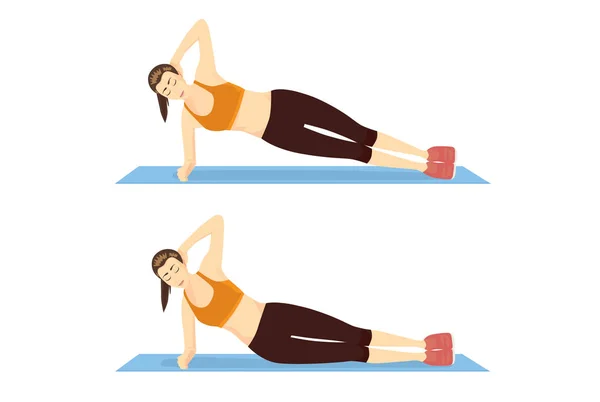
Vrouw Doet Side Bridge Oefening Stappen Blauwe Mat Illustratie Introductie  vectorafbeelding door © solar22 ⬇ Vectorstock #265933006
Side Bridge
Posterior lunge
clamshell_exercise-1
Clam Shells

Research article

 Fredericson M, Cookingham CL, Chaudhari AM, Dowdell BC, Oestreicher N, Sahrmann SA. Hip abductor weakness in distance runners with iliotibial band syndrome. Clinical Journal of Sport Medicine. 2000 Jul 1;10(3):169-75
Text Neck

Text Neck is a term given to individuals who excessively use their smart phones in a forward head posture. This posture biomechanically forces a lot of load to your neck muscles, specifically in the back of your neck. This stretch and increase demand on the muscles in your neck causes them to become tight. This tightness makes you wanna stretch it out and a lot of times you feel relief from stretching.

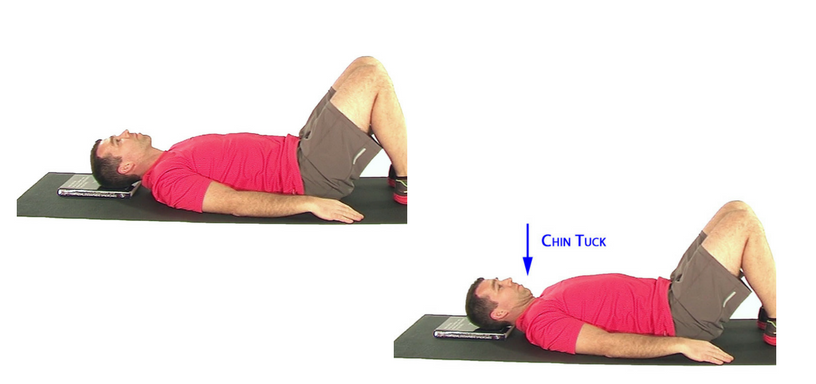
The forward head posture causes muscles to become weak. A few muscles in particular are a group of muscles in the front of your neck called the deep neck flexor muscles. These muscles can be activated by retracting your chin towards your neck. A simple exercise to strengthen this muscle is simply laying down on your back and producing a retraction movement thinking about bringing your chin to your neck. The common faults with this exercise is flexing your lower neck and bringing your head to far off the ground. This exercise done correctly should only have your head a few centimeters off the ground. The image below gives you a correct picture of how the exercise should look

Deep Neck Flexor Exercises

Strengthening your deep neck flexor muscles can be a great way to offset your muscle imbalances from staying in a prolonged head flexed posture. Finding ways to text in a position without having your head flexed is an obvious solution to solving pain from text neck.

Akodu, A. K., Akinbo, S. R., & Young, Q. O. (2018). Correlation among smartphone addiction, craniovertebral angle, scapular dyskinesis, and selected anthropometric variables in physiotherapy undergraduates. Journal of Taibah University Medical Sciences, 13(6), 528-534.

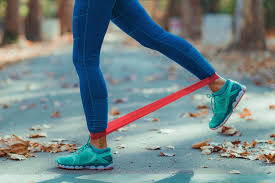
Resistance Band Placement for Gluteal Activation

You may have seen numerous people use resistance bands like the picture above for gluteal activation and resistance training. This exercise has become a favorite for many famous social media fitness influencers. The utility of this exercise has been popularized in the Rehab community to help with lower cross syndrome. Lower cross syndrome is a functional diagnosis that was popularized by a Czech Medical Doctor named Vladimir Janda. He proposed that lower cross syndrome is a function of muscle imbalances that occur from poor postures. He noticed that from poor postures such as sitting for lengths of time can produce tight hip flexors and weak hip extensors, generally speaking.

The resistance band gluteal exercise has been a staple exercise as of late which has motivated researchers to study resistance band placement and muscle activation patterns. The researchers placed bands around the knees, ankles (pictured above) and feet. They found that placing the bands around the feet had the greatest amount of Gluteal muscle activation. They also found that placing the band around the foot preferentially activated the gluteal muscles over the tensor fascia latae muscle. This point is important as this brings us back to the lower cross syndrome. Since the tensor fascia latae muscle is a hip flexor, it tends to be over active in people with lower cross syndrome and therefore must be identified as a muscle to lengthen instead of activating.

In general this article has given some great insight on how to isolate the gluteal muscles without activating other unwanted musculature. So remember to place the band around your feet the next time you perform this exercise !

Research article reference

Cambridge, E. D., Sidorkewicz, N., Ikeda, D. M., & McGill, S. M. (2012). Progressive hip rehabilitation: the effects of resistance band placement on gluteal activation during two common exercises. Clinical Biomechanics, 27(7), 719-724.